Cergy was designated as an EPA (Establissement Publique d’Amanegement) zone by the French Government in 1969. EPAs exist all over France. The French Government works with local authorities in Cergy in terms of city planning, and allocation of funds. EPAs get direct funding from the government in exchange for less power to oversee the city’s development.
Throughout Cergy’s development, we’re going to see how the government has changed how it’s allocating its resources and funds.
To set the scene. Cergy started off as a tiny city with a population of 3000 in 1968. It’s then designated as an EPA and funding for building projects starts flowing in.
Projects endeavored during this era use modern architecture techniques which at the time gives the city a unique and new kind of look.
The Val d’Oise prefecture building designed by French architect Henry Bernard is a great example of this.
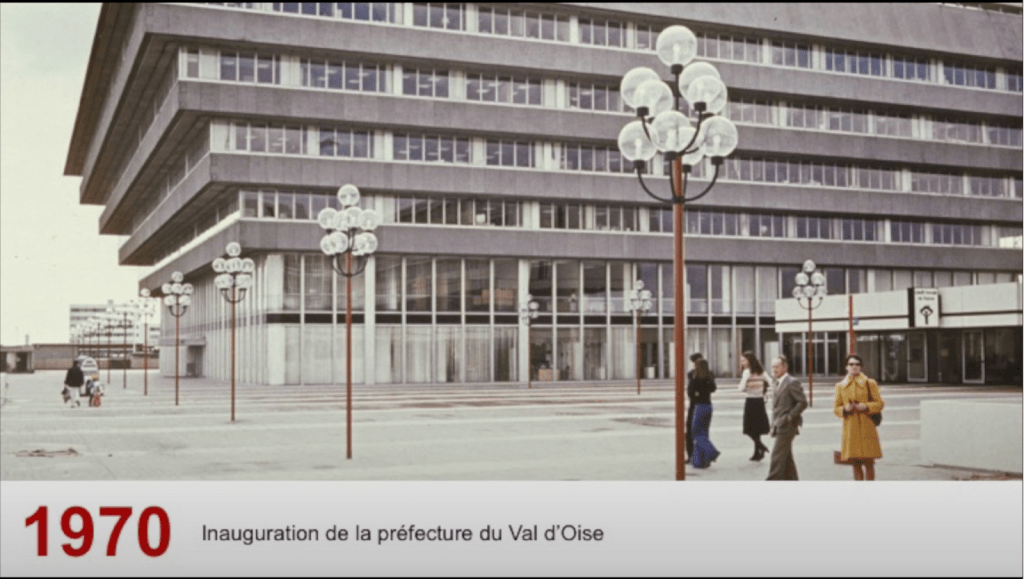
Completed in 1970, this building with architecture so different from the traditional french Haussmann style, brands Cergy to seem like a cool new place to visit and its proximity to Paris certainly brought an added plus.
In the early to late 70s, Cergy began to show signs of its eventual purpose, with the founding of the ESSEC business school in 1973.
Funny anecdote, someone who went to the same high school as me in the United States is going to ESSEC and I only know this because I randomly ran into them at our housing.
Which, as it turns out, is what I’m going to talk about next. We’re staying at Les Linandes Orange.
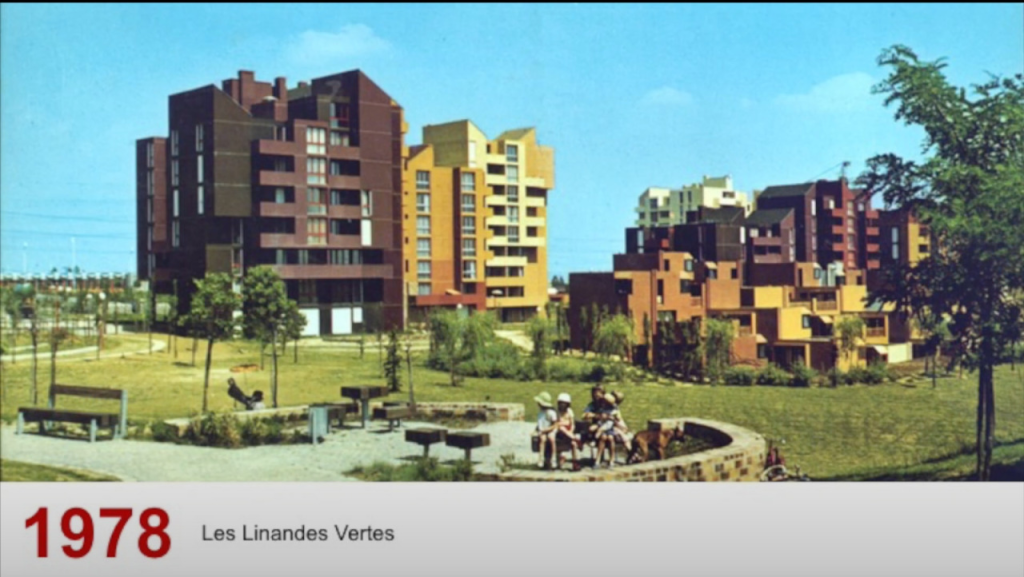
Les linandes is one of the many housing towers set up in Cergy and a 20-minute walk from the metro station, Cergy prefecture. With the introduction of this housing and because of the influx of students and educators for ESSEC, we see a population increase in Cergy to 9,000 people by 1975. This change represents the largest increase in population percentage-wise for cergy.
Moving forward to the 80s, we begin to see governmental initiatives to increase the quantity of housing paying off with an increase in population. But, I think that Cergy has ultimately benefited the most from its appeal as a place to set up a place of education. The appeal reached a very high point, when in 1988, Cergy got it’s own place on the train line to Paris. During this era, the large public university Cergy-Pontoise was founded.
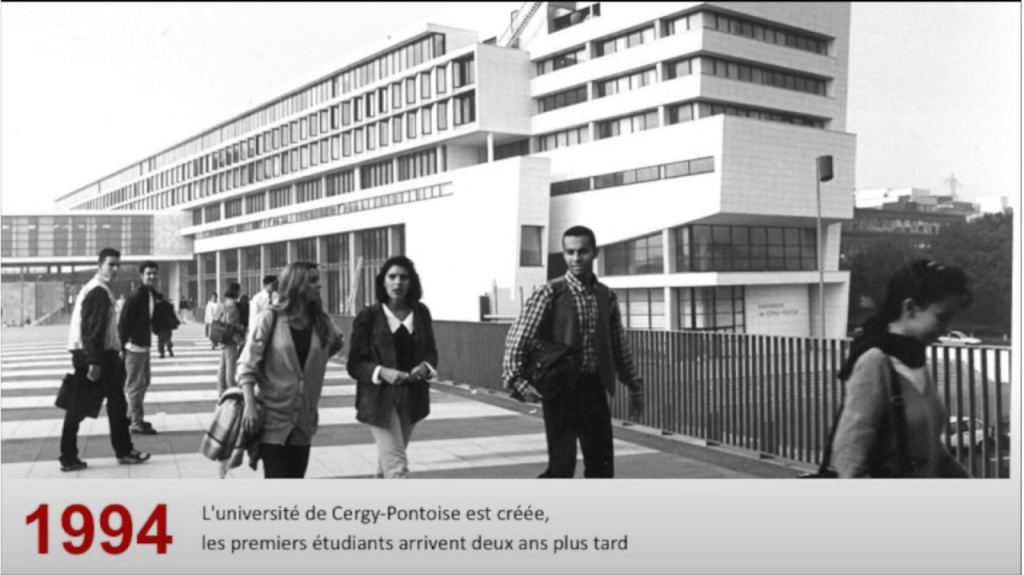
Students begin to fill dorm housing around the city and the population reached 54,000 in 1999.
At this point, Cergy is confident in its trajectory as a college town. We see more and more directed and informed investment in Cergy because with its population being about 50% students, it’s quite obvious what the city needs.
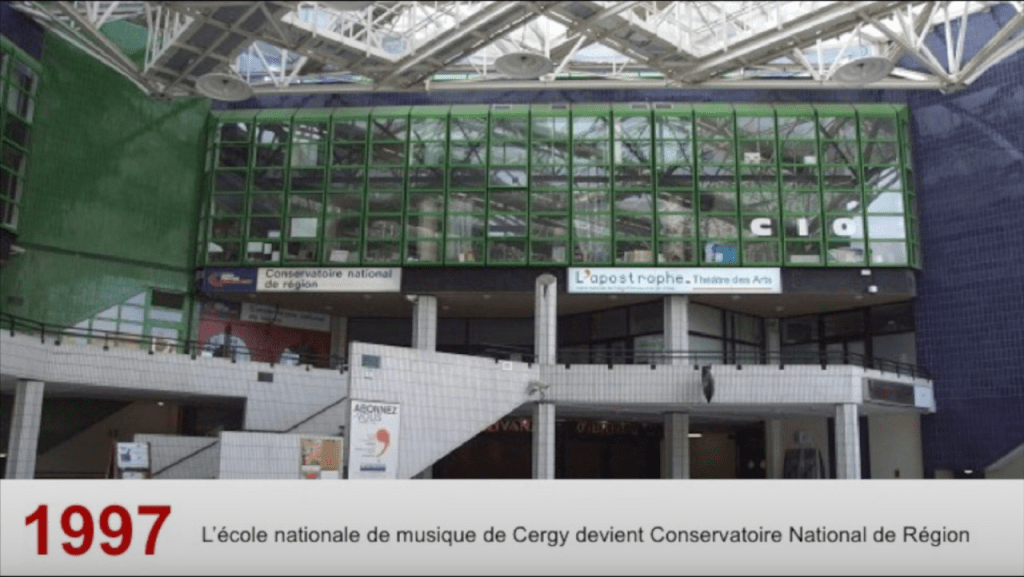
Like, from 1997 on, investment has gone into cultural centers, the renovation of shopping malls, and now towards an entire revamping of the Cergy prefecture metro line. So, Cergy is headed in the right direction. But, what about all of those old buildings that the French government made before they knew what Cergy was going to be? What happened to the buildings erected in the 1970s to make the city look like a cool suburb of Paris? What’s become of that innovative architecture work?
Yeah, those buildings are still here and they haven’t received the upkeep really required.

The same building by Henry Bernard doesn’t really fit in Cergy anymore. There’s an oddly soviet feel to some of the buildings. The scale and color combine to form a monolithic atmosphere which isn’t reflected in any of the buildings built once the city came into its own past the 90s.
Some of these buildings present legitimate problems for the city because they attract dangerous characters. Cergy still has a decently high crime rate.
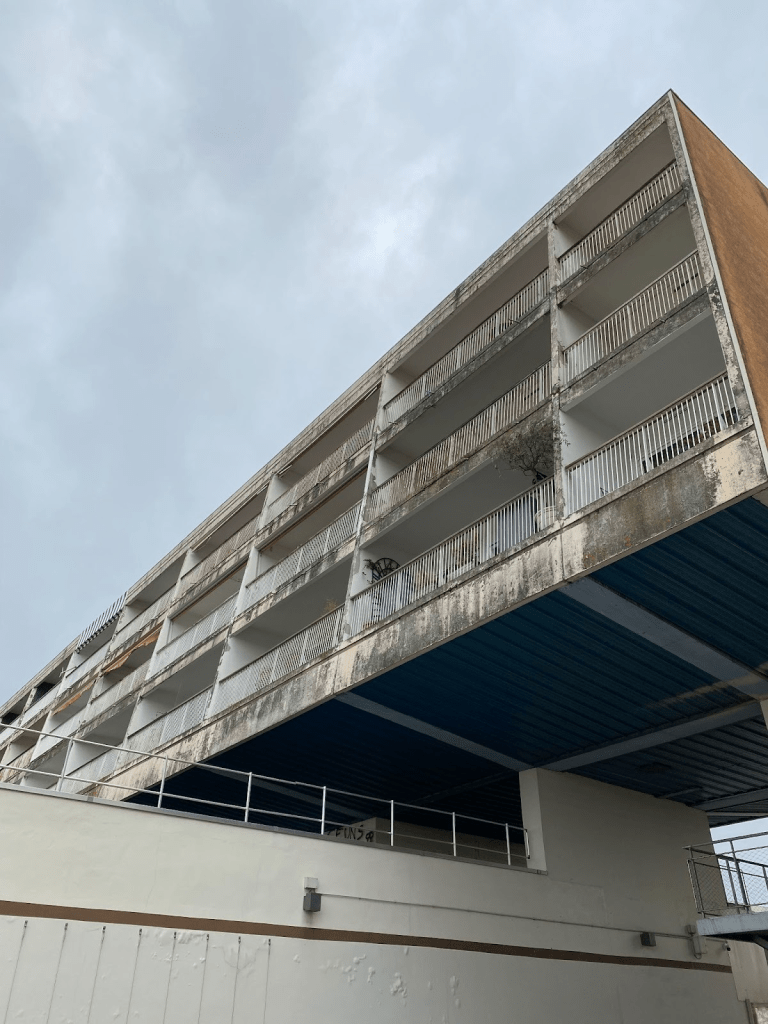
Some of the housing is overgrown and unkempt and allows for a feeling of, for lack of a better metaphor, like dirt under fingernails.
The picture above is actually kind of an interesting case because it brings up the start of how Cergy has dealt with the issue of old and decaying buildings. So, right there you can see some decaying apartments, and right below that, there’s this.
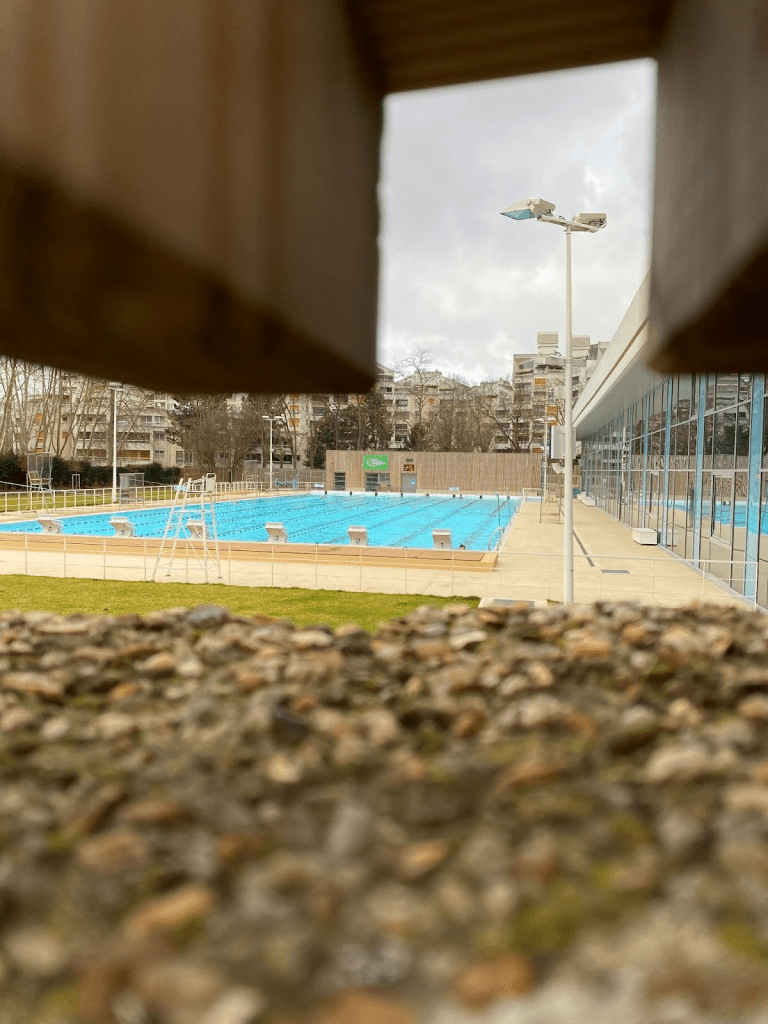
Photo quality aside, if you look closely it’s a public pool with a nice glass building on the right serving as the lobby, with 7 laps and a lifeguard booth all in good condition. Literally above that glass building is the run-down one in picture 2 above.
Cergy has become a juxtaposition of the old and the new in the starkest way I’ve seen in person. The picture below shows me that too.
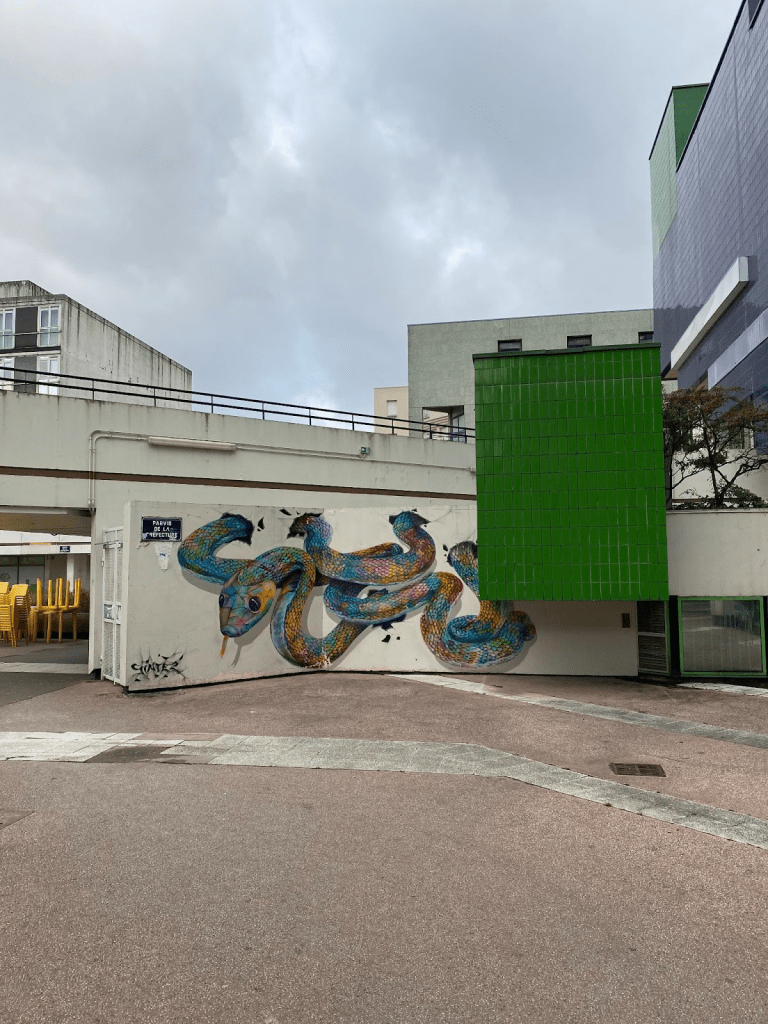
On the right, you see a part of the cergy conservatory, the green-tiled work that was erected in 1997. And, coming out of it is a mural of a snake drawn by an anonymous mural artist. My guess is that the artist is young and they’re drawing on an old wall which is peeling and chipping at the bottom and has an old-style french street sign on it.
My take is that the new is now physically washing up and pushing against the old.
To me, it seems like Cergy represents the juxtaposition of old investment in a town not exactly sure of itself yet. To now a bustling student-driven population where art thrives on walls around the town, where new investment and work in Cergy is now well directed, and where new investment is bound to improve the quality of infrastructure in the town. The newest developments around Cergy are amazing and suitable for those living here. Like
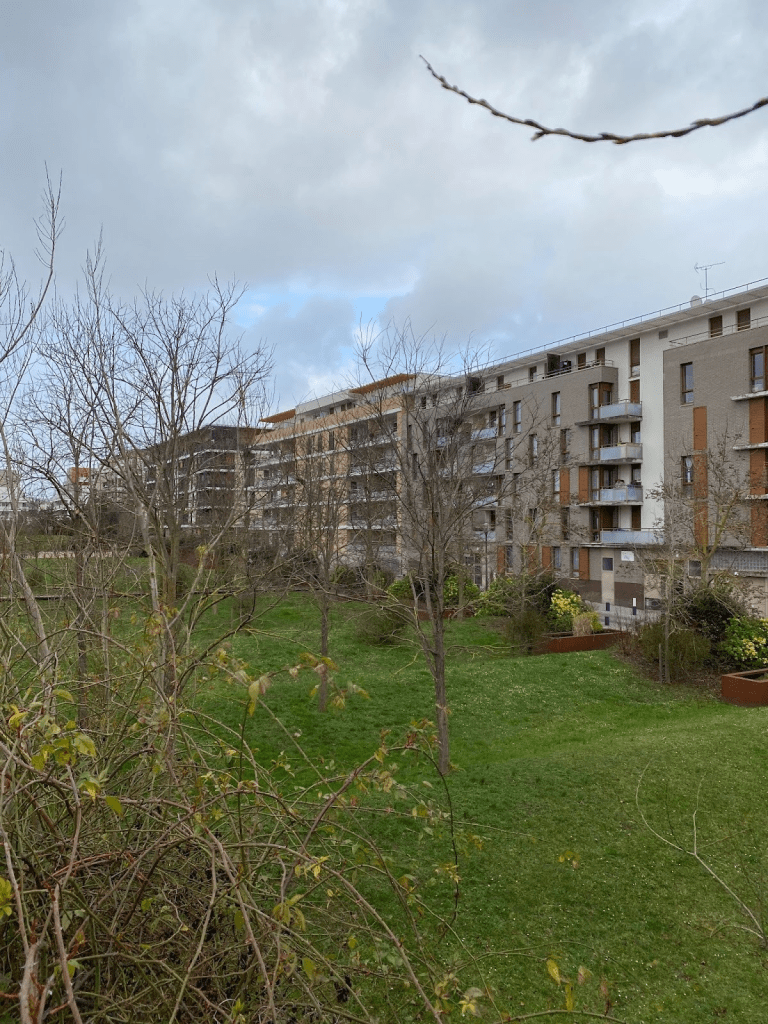
This housing is modern and nice and well designed for the city. So, I have no worries about Cergy moving forward. I just hope they can sort out the old building issue.
Nicholas Peabody
 Endicottnep